For over thirty years, a heavy block of stone sat quietly in a Japanese museum storage room. Inside that rock rested a partial skull, teeth, and a neck vertebra belonging to an armored dinosaur found along a Hokkaido riverbank. Paleontologists knew it was special, but technical limitations kept its true identity locked away for decades.
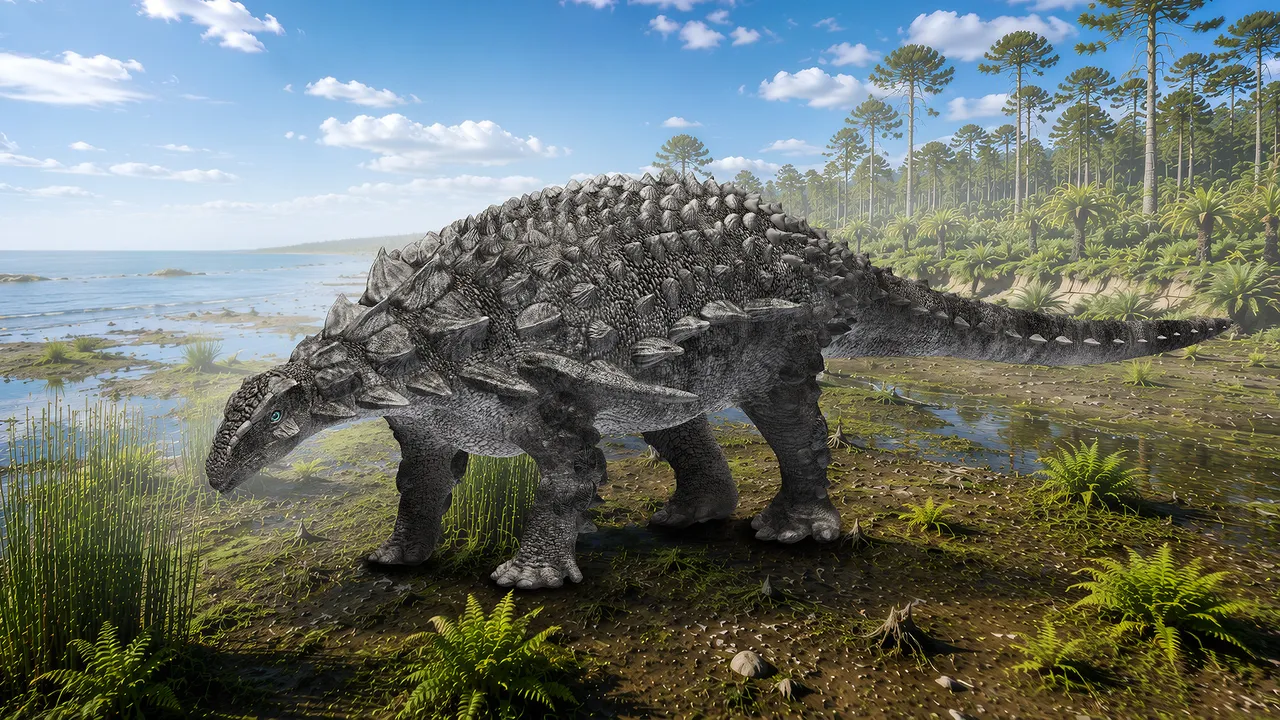
That silence finally broke when researchers officially named the specimen Nipponopelta yezoensis. It marks the very first time an ankylosaur has been formally named from Japan. But the classification yielded a twist that nobody expected. Instead of sharing close genetic ties with other Asian armored dinosaurs, Nipponopelta yezoensis lined up with species found thousands of miles away in North America and Europe.
If you think dinosaur migration patterns were straightforward, this discovery proves otherwise.
The Long Journey From Riverbank to Museum Shelf
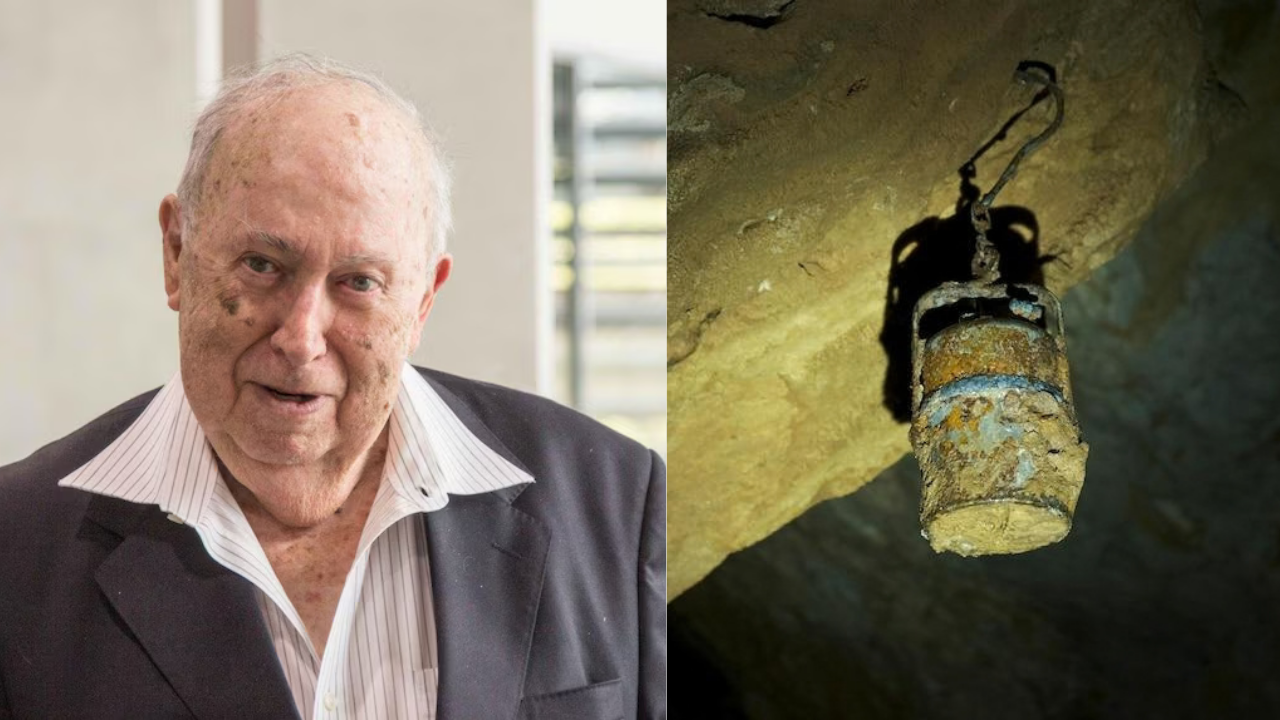
The fossil, cataloged as MCM A522, didn't come to light yesterday. Eijiro Goto originally found the specimen inside a hard nodule unearthed from the Hikagenosawa Formation along the Omakizawa River in Yubari, Hokkaido. He handed the find over to the Mikasa City Museum, where researchers took a preliminary look back in 2005.
Back then, scientists hit a wall. Hard rock encased the teeth, and the skull elements remained partially obscured. Acid preparation risked destroying fragile bone structures. Without modern visualization tools, the fossil sat in scientific limbo.
Enter modern technology. A team led by Shumpei Oyabu at Hokkaido University, alongside international colleagues, decided to revisit the specimen using high-resolution three-dimensional CT scanning.
What Three Dimensional CT Scans Unlocked
Digital reconstruction changed everything. The scans peeled back layers of matrix digitally, revealing hidden anatomy that manual preparation missed entirely.
Researchers could finally examine:
- A preserved section of the lower jaw
- Two completely intact teeth tucked inside the bone
- The delicate structure of the left inner ear
- Complex ornamentation patterns on the back of the skull
These details provided the diagnostic traits needed to establish a brand-new genus and species. More importantly, it gave science the only known Asian nodosaurid skull material available for study. Most other Asian nodosaurids are known exclusively from body fossils rather than craniums, making Nipponopelta yezoensis an anchor point for future comparisons.
The Surprising North American Connection
When the research team ran phylogenetic analyses to map out the family tree, the results shocked them.
You would naturally assume an ankylosaur discovered in Japan would group closely with species unearthed in China, Mongolia, or other parts of Asia. Instead, Nipponopelta yezoensis landed deep within a cluster of derived North American and European nodosaurids.
Its closest evolutionary cousins include well-known heavyweights like Pawpawsaurus, Panoplosaurus, Nodosaurus, Edmontonia, Denversaurus, and the European form Dracopelta.
How did an Asian nodosaurid end up genetically aligned with fauna from across the globe? Ancestral geographic modeling suggests that the lineage behind Nipponopelta had an ancient, widespread distribution stretching across Laramidia, Appalachia, and Asia.
Why Ancient Coastlines Matter
To understand how these armored herbivores moved between continents, scientists had to look at the environment they lived in.
Geological data indicates that Nipponopelta yezoensis favored marine-influenced habitats. It hung out along coastal plains and estuarine ecosystems rather than deep inland forests. This coastal preference likely acted as a driving mechanism for long-distance dispersal. If you prefer walking beaches and marshy coastlines, moving across continental land bridges or island chains becomes a lot more viable over millions of years.
The Hikagenosawa Formation itself forms part of the Yezo Group, a marine-dominated sedimentary sequence in Hokkaido. This specific region has turned out to be a goldmine for Cretaceous fossils. It previously yielded major discoveries like the duck-billed dinosaur Kamuysaurus japonicus and the long-clawed therizinosaurid Paralitherizinosaurus japonicus.
Hokkaido is rewriting what we know about how ancient ecosystems operated in the northern Pacific realm during the Late Cretaceous, roughly 96 to 94 million years ago.
Stop viewing prehistoric migration as a simple point-to-point march. Coastlines served as ancient highways, and a single fossil sitting in storage for decades can rewrite global dinosaur family trees. Keep an eye on ongoing CT scan re-evaluations in regional museums. The next major paleontology breakthrough might already be sitting on a dusty shelf near you.